September 20, 2026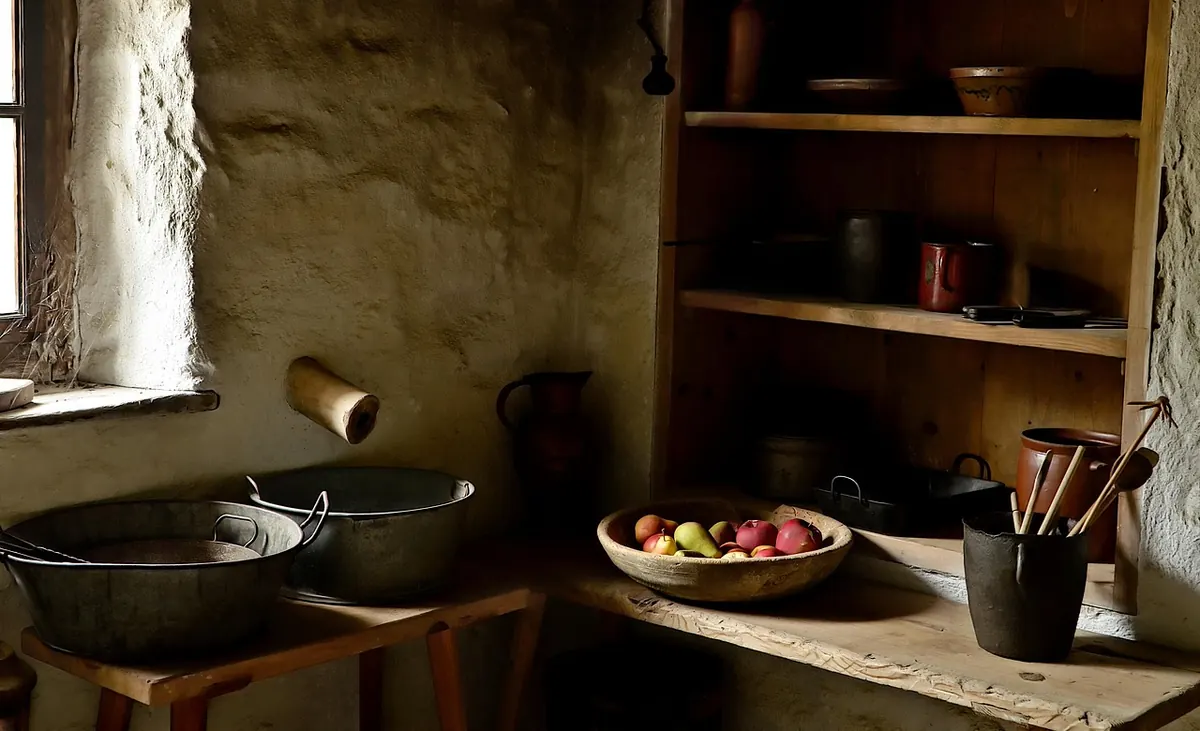
A cottage kitchen should look like it grew there. Not styled to perfection, not matched to a catalogue page, but assembled slowly, one good find at a time, until the room has the easy warmth of a place where people actually cook. Vintage pieces do that work better than anything new, partly because they carry a past, and partly because they refuse to be too precious. A chip here, a faded label there, and suddenly nobody worries about spilling the tea.
The trick is knowing how to mix those finds so the room reads charming rather than cluttered. That comes down to a few decisions: what to display, what to store, and how much rough texture to balance against smooth surfaces.
Start With What You Already Love
Before you buy anything, empty one shelf or one countertop and put back only the pieces you would rescue from a house fire. A grandmother's mixing bowl. A tin sign from a farm sale. Three mismatched teacups you keep because the patterns make you smile. That small pile is your palette, and it tells you more about your kitchen's direction than any mood board.
Notice what repeats. If most of your keepers are cream, honey, and soft green, lean into that. If they are all bold enamel and chipped red paint, build around that instead. Forcing a cottage look onto a collection that genuinely wants to be bright and farmhouse-cheerful never works.
Open Shelving: Practical Rules That Keep It Tidy
Open shelving is the backbone of a cottage kitchen, but it fails when it turns into a dumping ground. The fix is simple: shelving holds what you use often and what you like looking at. Everything else, from the pasta maker to the spare blender, goes behind a cabinet door.
A few guidelines that make the difference:
- Keep the top shelf light. A row of small jars, a couple of pitchers, one trailing plant. Heavy stacks up high make a room feel like it is sinking.
- Group in odd numbers. Three bowls, five jars. Even numbers tend to look arranged rather than lived in.
- Vary height on purpose. A tall wooden board behind a low stack of plates gives the eye somewhere to travel.
- Mix materials. Crockery, tin, glass, and one or two wooden pieces. All one material reads like a shop display.
- Leave gaps. Empty space is what makes the collection look chosen. Crowd it and the charm disappears.
If your shelves are painted, choose a colour drawn from your vintage pieces rather than white by default. Soft sage, warm cream, or a muted blue behind cream crockery feels far more cottage than stark white, which can turn cold in a kitchen with limited natural light.
Mounting and Weight
Fix brackets into studs or use proper wall anchors rated for the load, and never hang a shelf above a hob or directly over a kettle. Grease and steam ruin paper labels, fabric bunting, and anything with a painted finish. It is worth checking with a qualified tradesperson if you are unsure what your wall will hold.
Mixing Flea Market Finds Without the Jumble
The most common mistake with vintage kitchens is buying everything that looks old. The result is a room with no focal point and no rest for the eye. Instead, choose one or two star pieces and let the rest be quiet.
A star piece might be an old dresser repainted in a soft chalk finish, a farmhouse table with genuine wear on the edges, or a set of enamel jugs in one colour. Around those, use plain, neutral basics: simple white plates, a plain linen runner, plain glass jars. The vintage stands out because the background does not compete.
When you are at a market, run through a quick mental checklist before you hand over money:
- Does it work? Test drawers, hinges, and handles. A wobbly chair is only charming until someone sits on it.
- Can it be cleaned safely? Kitchen items need washing. Skip anything with flaking paint on food-contact surfaces.
- Is it food safe? Old painted crockery, cracked glazes, and unknown metals are best used for display only, not for serving.
- Does it belong with what you own? If you cannot picture it on your shelf right now, leave it.
- Will you actually use it? A wooden dough bowl earns its space. A rusty milk can with no purpose usually becomes clutter.
One more note on older wares: if a piece has an unknown glaze or a strong chemical smell, keep it decorative. When in doubt about food safety, display it and use modern dishes for eating.
Rustic Textures That Soften a Kitchen
Kitchens are hard rooms. Stone, tile, metal, glass. Vintage decor works because it introduces softness, so bring in as much texture as you can manage without making cleaning a chore.
Good places to add it:
- On the floor: a small woven or cotton rug in front of the sink, in a colour that hides the odd splash.
- At the window: unlined linen or cotton curtains that filter light rather than block it.
- On the table: a faded quilt square or a length of vintage linen as a runner.
- On seating: loose cushions tied to chair backs, in ticking stripe or washed florals.
- Near the door: a wicker basket for produce, a hook with an apron, a wooden board leaning against the wall.
Keep patterns to two or three at most. A ticking stripe with a faded floral and a plain linen works. Add a fourth print and the room starts to feel busy rather than layered.
Lighting and Small Details
Vintage lighting does more for atmosphere than almost anything else. A small pendant over the table, a wall light beside the shelves, or an old table lamp on the counter turned low in the evening all create the pooled, gentle light that makes cottages feel cosy. Check the wiring on any vintage fixture before use, and have it rewired by a qualified electrician if there is any doubt.
Details finish the room: a row of mismatched hooks for mugs, an old tin holding wooden spoons, a hand-written label on a jar. These small touches cost very little and do more than a new splashback.
Keeping It Warm, Not Perfect
A cottage kitchen should never feel finished in a museum sense. Let a board stay slightly stained. Let the shelves hold the mug you reach for every morning. Rotate your finds seasonally, bring in dried herbs or a bowl of apples, and change the tea towel when you feel like it.
The real work is restraint. Buy less, choose pieces you will still like in ten years, and leave space for the everyday things that make a kitchen yours. That is what visitors notice when they walk in and immediately feel they could put the kettle on.
Photo: JerzyGórecki / Pixabay